Catalogue4 min read
A shopping wishlist is not a beauty collection
Shopping wishlist apps are good at catching things you might buy. They are a poor home for the products you already own, the shade you chose, and the routine you actually follow.
Shopping wishlist apps are good at one job: catching something you might buy, from any shop, before the tab closes. That is a real problem. Screenshots pile up. Shop wishlists only work inside that shop. A single list of wants across every retailer is a genuine improvement.
It is also a different job from keeping a beauty collection. If you have been using a shopping wishlist for makeup you already own, and you still cannot answer "which shade did I buy" or "do I already have a cream cleanser", that gap is why.
This is not an argument against saving wants. It is an argument for noticing that wanting and having are two different jobs, and that a tool built for checkout is unlikely to be good at both.
What a shopping wishlist remembers
A shopping wishlist remembers the thing in front of you: a photo, a price, a link back to the shop. That is enough to compare two jumpers, or to send a birthday list to someone else. The product is a future purchase.
Beauty needs more than that, even before you buy. The shade name. Whether you already own something in the same family. Whether this is a repurchase or a curiosity. After you buy, it needs still more: where it sits in the morning, whether you finished the bottle, whether you would buy it again.
A list of wants cannot answer those questions because it was never asked to. Once you tap Buy, the job is done. The item can be marked purchased and forgotten.
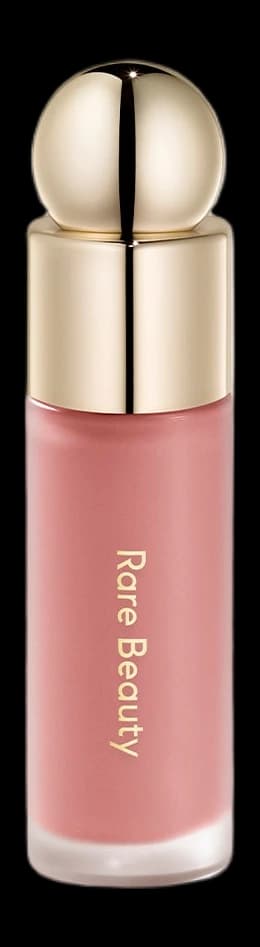
Rare Beauty
Soft Pinch Liquid Blush
Hope
The shade name is the whole product. A screenshot of the bottle will not tell you Hope from Joy six months later. Save the record, not the pin.
Why beauty breaks that model
Beauty products stay in your life. A serum is not consumed at checkout. You use it for months, you restock the exact one, you put it in a routine next to two others that cannot be applied at the same time. A foundation shade that is almost right is unwearable. A duplicate moisturiser is money you did not mean to spend.
The questions you ask of a beauty collection are closed and specific:
- Do I already own this, or something too close to it?
- Which shade did I actually buy, not the one in the campaign image?
- What do I put on in the morning, in order?
- What did I finish, and would I repurchase?
A shopping wishlist can hold the link. It cannot hold the facts those questions turn on, and it has no reason to, because its success looks like a purchase.
What is a better shopping wishlist for beauty products?
A better home is a catalogue: one record per product, with the brand, the name, the shade or size, the shop, and a status that says whether you own it, want it, or have finished it. Then that same record can appear on a wishlist, in a routine, on a shelf, and on a board, without being typed in again.
The test is simple. If you would still need the record after you bought the product, it does not belong only in a shopping list.
You can do most of this in a notes app. The structure is what does the work. Beauty Board is built to do that structure properly: paste a shop link, keep the details the page makes available, and use the product everywhere afterwards. There is more on the save step in how to save a product from any shop, and more on the own-versus-want split in a beauty wishlist that is not stuck in one shop.
Keep the wants. Keep them next to what you own.
The healthy setup is not "never save a want". It is one place that can hold both, with a clear status on each product, so you can see the want next to the three cleansers you already have.
Shopping wishlists stay useful for everything that really is just a future purchase: clothes, furniture, a kettle. Beauty is the category where the after-you-buy life of the product is the whole point. Put those products somewhere that still has a job on Tuesday morning.
Privacy tends to matter more once the record is real. A full catalogue of what you own is more personal than a list of things you might buy. In Beauty Board everything stays private until you share a view-only link for one list, which is the point of sharing a board without sharing your whole collection. If that list is a wishlist or a gift list, people with the link can mark a product they will get, so two people do not buy the same gift. You see it as reserved. You never see who reserved it.
Where to start
Pick the ten products you actually reach for. Write the brand, the name, and the shade. Then add the three things you still want, from whichever shops they live in. If those two piles cannot sit in the same tool without confusion, you have been asking a shopping list to be a collection.
Beauty Board is free to start and needs no card. Save the want. Keep the thing you already own. Use the same record for both.
Written by Beauty Board
Notes on saving and curating beauty from the Beauty Board team.