Curation6 min read
Why Pinterest is a weak place to store products you actually buy
Pinterest is good at looks. Beauty Board is for the products you save: brand, shade, shop, and whether you already own it.
Pinterest is a good place to collect looks and a weak place to store the products you actually buy. A pin holds a picture and a link. A purchase needs a brand, a product name, the shade you chose, the shop you bought it from, and whether it is already in your drawer. If you have been using Pinterest for beauty products and keep ending up back at the search bar anyway, that gap is why.
This is not an argument for leaving Pinterest. It is an argument for noticing that inspiration and inventory are two different jobs, and that one tool is unlikely to be good at both.
Inspiration and inventory are not the same job
Inspiration is open-ended. You are gathering a mood: a smoky eye you might try, a shelf you like the look of, a colour that keeps catching you. Nothing needs to be precise, because you are not going to act on most of it. Pinterest is genuinely good at this, and it is the reason the boards fill up so quickly.
Inventory is the opposite. It is closed and specific. There is one right answer to "which foundation shade did I buy" and a wrong answer costs you money. When you use Pinterest boards for makeup you own, you are asking a mood tool to hold facts.
Most people notice the strain at the shop counter or the checkout page. You know you saved the thing. You can picture the image. You cannot remember the shade name, and the pin does not know it either.
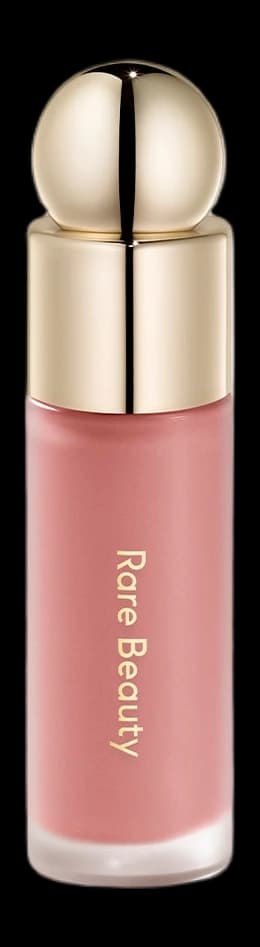
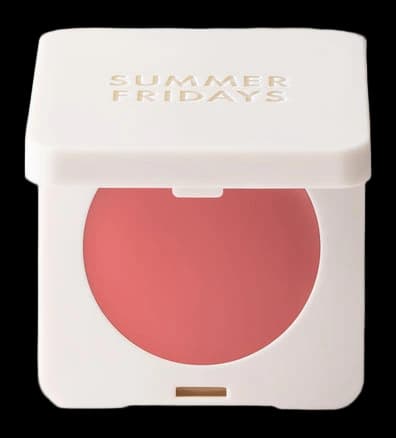
Rare Beauty
Soft Pinch Liquid Blush
Hope
The shade name is the whole product. A screenshot of the bottle will not tell you Hope from Joy six months later. Save the record, not the pin.
What a pin actually remembers
A pin remembers three things well: an image, a link, and the board you filed it under. That is enough for a look, and it is the whole design.
What it does not hold is everything the purchase depends on:
- The brand and exact product name, separate from each other and searchable later.
- The shade or variant you chose, not the shade in the photo.
- A working route back to the shop, months after saving, when links go dead or products get discontinued.
- Whether you are using it, want it, or already tried it.
- Your own photo of the product as it actually sits on your shelf.
There is a quieter problem underneath all of that. Saving products on Pinterest is fast, so boards get big, and a big board of images with no structure is only browsable. You can scroll it. You cannot really search it, and you certainly cannot answer "do I already own a cream blush in this family" without going through it by eye.
What is a better Pinterest alternative for organising products?
A better alternative stores products as records rather than pictures. Beauty Board is built for that job. You paste a shop link, and it keeps the brand, the product name, the shade or variant, the shop, and a clean packshot as separate fields you can search, sort, and compare.
Inspiration boards store one thing. Product records store the details a purchase actually turns on. That distinction matters more than a prettier grid, because the questions you ask about your own collection are always specific: what do I own, what did I like, what am I about to buy twice.
How to move a beauty board into Beauty Board
You do not have to migrate everything. Split the Pinterest board in two, then save only the real products.
- Leave the looks where they are. Moods, hair, half-formed ideas, and things you are nowhere near buying stay on Pinterest.
- Pick the products you have bought or intend to buy. One product, one record. Not a screenshot with four things in it.
- Paste each shop link into Beauty Board. Review the shade. Add anything without a link by hand.
- Mark the status. Wishlist, Using, Tried, or Saved. This one field is what stops you buying the same thing twice.
- Put them on a board or a list so you can see them together: a colour family on a canvas, a wishlist, a collection of what you actually reach for.
- Check Beauty Board before you buy, not after. The catalogue only pays you back if you look at it at the moment of temptation.
Step four is the one people skip. If you want the longer version of that argument, it is in how to stop buying skincare you already own.
Where Beauty Board fits
Beauty Board does the record-keeping part properly. You paste a product link from shops such as Sephora, MECCA, Adore Beauty, Priceline, Cult Beauty, or Ulta Beauty, and it pulls across the details the page makes available, then processes the product photo into a clean cutout. What it finds depends on the shop page, so you can review it and correct anything incomplete. If there is no link at all, add the name, brand, and a photo by hand.
From there the products are yours to arrange: on a freeform canvas, into boards, lists, routines, collections, and wishlists. It looks like a mood board and behaves like a catalogue, which is the combination an inspiration tool was never built to give you.
The shade field is the small thing that changes the most. Once your records know that you bought the second-lightest shade, not the one in the campaign image, restocking stops being a guess.
Keep both, for different things
The healthy setup is two tools with clear jobs. Pinterest stays what it is good at: looks, moods, hair, half-formed ideas, things you are nowhere near buying. Beauty Board holds what is real: using, wanted, tried, saved.
In practice the boundary is simple. If a saved item has a price and a shade, paste the shop link into Beauty Board. If it has neither, it belongs on an inspiration board. Nothing needs deleting. You are just sorting by which question you will ask of it later.
Privacy tends to matter more once your collection is real, because a full record of what you own and what you spend is more personal than a board of pretty pictures. In Beauty Board everything stays private until you deliberately create a view-only link, and that link shows one board or one list rather than everything, which is the point of sharing a board without sharing your whole collection.
Where to start
Pick the ten products you actually reach for and paste them into Beauty Board with brand, name, and shade. That alone will tell you whether your Pinterest boards have been doing this job or just looking like they were.
Beauty Board is free to start and needs no card. Keep pinning the looks. Keep the products somewhere they can answer questions.
Written by Beauty Board
Notes on saving and curating beauty from the Beauty Board team.